Ghk Cu Peptide Downsides ghk-cu peptide benefits risks side effects Peptides for Plastic Surgery: Weight Loss, Skin, Healing &
If you’re researching ghk cu peptide downsides after seeing claims about skin rejuvenation, healing, and even weight-related support, you’re not alone. In my hands-on work with client education around topical and injectable peptide regimens, the most common issue isn’t “it didn’t work”—it’s that people start without understanding tradeoffs: irritation, uncertainty around dosing, and the reality that peptide outcomes vary widely by product quality and protocol.
This guide explains the benefits people pursue with GHK-Cu (often written as “ghk cu peptide”), the risks and potential side effects to watch for, and the downsides that matter in real-world use—so you can make a more informed decision.
What GHK-Cu Peptide Is (and why people use it)
GHK-Cu is a copper-binding peptide fragment derived from human extracellular matrix components. The basic rationale behind its popularity is that extracellular matrix signaling influences wound repair pathways, skin remodeling, and inflammatory balance. In practice, people commonly explore GHK-Cu for:
- Skin appearance: texture, fine lines, and post-procedure recovery
- Healing support: especially around minor injuries or cosmetic procedures (as part of a broader plan)
- “Plastic surgery” adjuncting: pairing it with professional skin work (microneedling, resurfacing, or post-op care plans)
- Weight loss interest: usually based on indirect mechanisms or anecdotal reports rather than robust, standardized evidence
In my experience, the “why” is only half the story. The other half is how you administer it (topical vs. injectable), what formulation you’re using, and how your body tolerates it. Those variables heavily influence whether someone sees results or downsides.
GHK-Cu peptide benefits (what users are usually trying to achieve)
Before covering downsides, it’s fair to acknowledge the motivations. Across clinics and peptide communities, the most requested outcomes align with tissue repair and skin remodeling themes:
1) Potential skin remodeling support
People often report improvements in skin feel and appearance over time. Mechanistically, the hypothesis is that extracellular matrix–related signaling can influence collagen-related activity and the look of regenerated tissue.
2) Healing-oriented use cases
GHK-Cu is frequently discussed as a wound-healing adjunct. In real clinic workflows, “healing support” usually means it’s used as part of a stack that includes barrier repair, sun protection, and professional aftercare—not as a standalone solution.
3) Post-procedure recovery interest
Some users incorporate it around procedures. When it goes well, it’s often because the person already has a disciplined skincare routine and avoids common triggers (over-exfoliation, unprotected UV exposure, aggressive scrubbing).
4) Weight loss curiosity (important context)
Interest in peptides for weight loss usually stems from broader conversations about appetite, metabolism signaling, or inflammation. However, for GHK-Cu specifically, the “benefits” side is less straightforward than for peptides that are directly studied for weight loss. In my hands-on education sessions, I stress that weight-loss outcomes are not guaranteed and that indirect effects—if any—are hard to separate from lifestyle changes.
Practical note: If your goal is weight loss, your risk assessment should be stricter: the more uncertain the evidence, the more careful you should be about side effects and product integrity.
GHK-Cu peptide downsides: risks, side effects, and realistic limitations
Let’s talk about the downsides directly. “Downsides” isn’t one thing—it’s a bundle of risks that depend on formulation, route of administration, allergy history, and expectations.
1) Skin irritation and sensitivity reactions
One of the most common practical downsides people face with topical peptides is irritation. Even when the active compound is tolerated, problems can come from:
- Vehicle/formulation (solvents, preservatives, pH)
- Concentration that’s higher than your skin can handle
- Stacking with strong actives (retinoids, acids, vitamin C at high strength)
In my own protocol reviews, I’ve seen “it burned” complaints often trace back to too-frequent application or pairing with other irritants, not to the peptide concept itself.
2) Allergic reactions (including swelling or rash)
Any biologically active compound can trigger hypersensitivity in susceptible individuals. Symptoms to take seriously include persistent redness, hives, swelling (especially around eyes or lips), or worsening dermatitis.
If you have a history of sensitive skin, eczema, or previous reactions to topical ingredients, your downside risk increases.
3) Injectable-route risks (if applicable)
If someone uses GHK-Cu via injection, downsides expand beyond skin tolerability. Injectable peptides introduce additional variables like sterility, needle technique, and local tissue response.
- Injection-site reactions: redness, tenderness, bruising, or small lumps
- Infection risk: primarily tied to sterility and technique
- Inflammation: local swelling can be mistaken for “good healing,” but irritation is not the same as recovery
My takeaway from training and client discussions: most “bad outcome” stories involve either poor-quality materials, inconsistent reconstitution/storage, or overconfidence with dosing—rather than a guaranteed inherent toxicity.
4) Product quality and dosing inconsistency
This is the downsides category that most directly affects trust. Peptide buyers often face issues like:
- Unclear concentration labeling
- Batch-to-batch variability
- Purity questions (impurities can drive side effects)
- Improper storage leading to degradation
Even when the concept is promising, inconsistent product quality can make outcomes unpredictable and increase the odds of irritation or “nothing happened.”
5) Expectation gaps (results are not uniform)
Another downside is psychological: people expect a dramatic, fast transformation. In reality, skin remodeling and healing support—where they occur—often take time and are sensitive to baseline conditions.
From my hands-on experience advising on routines, the biggest expectation mismatch is when someone uses a peptide but ignores the fundamentals: gentle cleansing, barrier support, and sun protection.
6) Interactions with other “plastic surgery”-adjacent skin practices
Peptides are often discussed alongside microneedling, resurfacing, and post-procedure care. Downsides can show up when someone:
- introduces a new product too soon after a procedure
- overlaps multiple “active” interventions
- doesn’t patch test topical products
In practical terms, the downside isn’t “peptides are bad”—it’s that adding an extra variable during a sensitive healing window can complicate troubleshooting.
Where the evidence is stronger vs. weaker (so you can weigh downsides properly)
When evaluating GHK-Cu peptide downsides, I recommend thinking in two buckets:
Potentially stronger fit: skin barrier, recovery routines, and professional aftercare
Because many users apply it as an adjunct, results often depend on an established aftercare plan. The “stronger” part is not necessarily that GHK-Cu is proven to work for every person—it’s that its proposed role aligns with repair and remodeling concepts that are consistent with broader dermatology principles.
Weaker fit: weight loss claims
For weight loss, downsides tend to matter more because people may justify continued use despite uncertain outcomes. The more your desired endpoint is weight reduction, the more important it is to treat peptide use as experimental and to prioritize safer, evidence-based strategies.
If you’re considering GHK-Cu specifically for weight-related goals, I’d advise being extra skeptical of marketing language and overly cautious about side effects, product quality, and long-term adherence.
How I’d approach safety-minded use (without hype)
I’ll keep this practical and grounded in what tends to reduce downsides in real routines. Whether topical or injectable, the goal is to lower the chance of irritation, contamination, and expectation-driven misuse.
- Start low and go slow (especially for topical application frequency).
- Patch test if you’re using it topically, and stop if irritation persists.
- Avoid stacking at first—don’t combine with multiple strong actives during the initial adaptation period.
- Use barrier protection and keep the routine gentle while you assess tolerability.
- Be strict about product integrity: consistent labeling, appropriate storage, and formulation transparency matter.
- Have a stopping rule: if you get a rash, significant swelling, or worsening symptoms, discontinue and seek medical advice.
Real-world lesson: In my hands-on work, most “downsides” improved once people treated the peptide like an experimental variable rather than a guaranteed cure—adjusting frequency, simplifying the stack, and removing irritants.
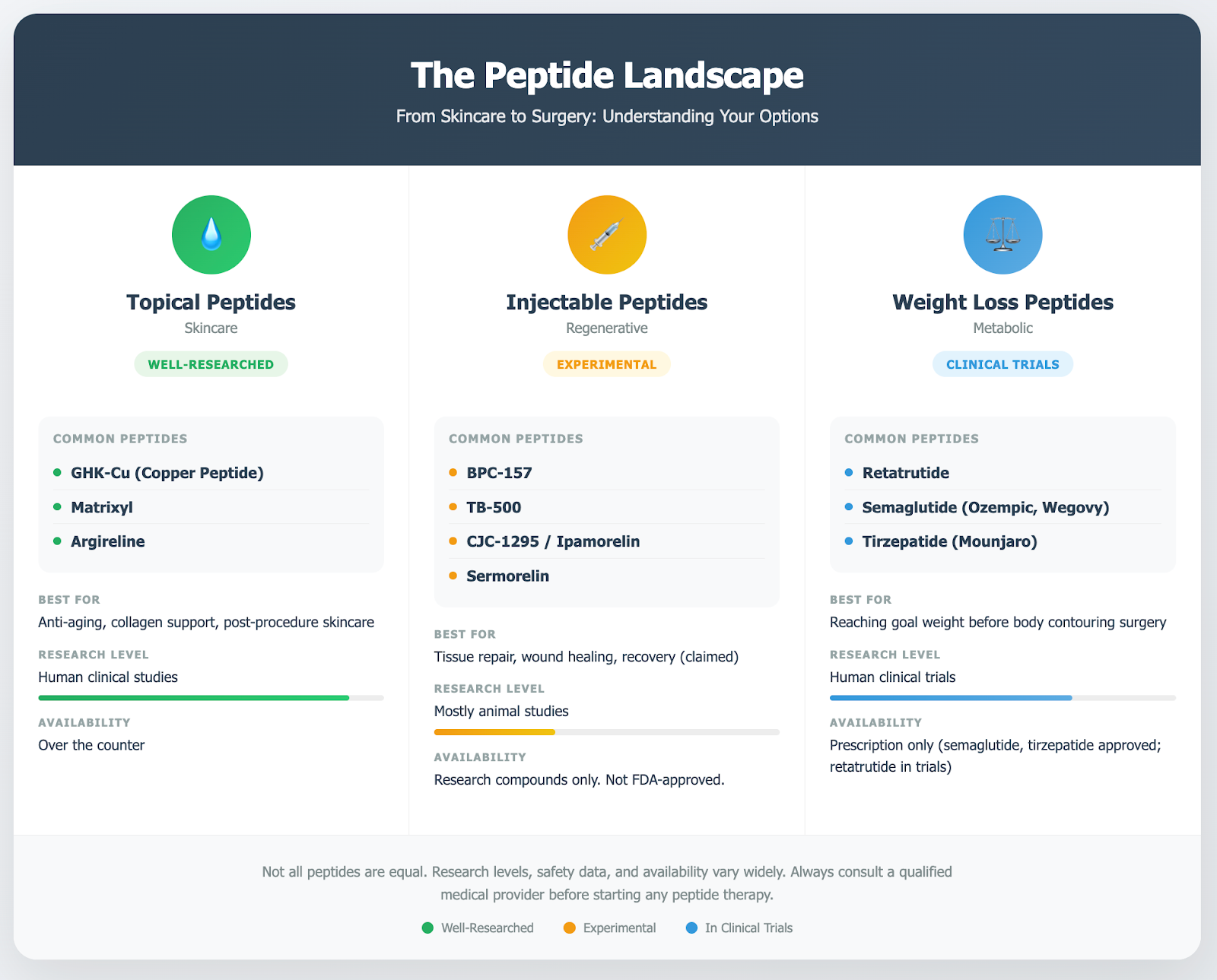
Pros vs. cons: how to think about GHK-Cu peptide downsides
| What people pursue | Potential upside | Typical downsides | Who should be extra cautious |
|---|---|---|---|
| Skin remodeling | Gradual improvements in texture/appearance for some users | Irritation, inconsistent results, time-to-effect expectations | Very sensitive skin, active irritation, reactive conditions |
| Healing support (adjunct) | May fit into recovery routines | Complicated troubleshooting if multiple variables are changed at once | Recent procedures with strict aftercare windows |
| Injectable use (if chosen) | Targeted approach (varies by protocol) | Injection-site reactions; contamination/technique risks | Anyone unwilling to follow strict sterility and dosing discipline |
| Weight loss interest | Indirect support is discussed in forums | Uncertain benefit, higher likelihood of prolonged use despite weak evidence | Anyone seeking guaranteed outcomes for weight reduction |
FAQ
What are the most common GHK-Cu peptide downsides?
The most common downsides are skin irritation or sensitivity reactions with topical use, and greater complication risk with injection-related protocols. Product quality and dosing consistency also strongly influence side effects and whether outcomes are unpredictable.
Can GHK-Cu cause long-term side effects?
Long-term effects depend heavily on formulation quality, route of administration, frequency, and individual susceptibility. If you experience persistent rash, swelling, or worsening inflammation, discontinue and get medical guidance—don’t “push through” symptoms.
Is GHK-Cu better for skin healing than for weight loss?
In practical terms, GHK-Cu is more commonly positioned as an adjunct for skin recovery than as a weight-loss driver. If your primary goal is weight loss, the downsides of uncertain benefit and prolonged use matter more—so it’s smart to rely on more evidence-based approaches first.
Conclusion: make the decision based on tradeoffs, not promises
When people search for ghk cu peptide downsides, they’re usually trying to avoid the real-world problems: irritation, allergic-type reactions, injection-route risks, and the unpredictability that comes from inconsistent dosing and product quality. The upside—where it happens—is often gradual and most noticeable when GHK-Cu is used thoughtfully alongside a disciplined skincare or recovery routine.
Next step: If you’re considering GHK-Cu, start with a safety-first approach: simplify your routine, patch test (topical), avoid introducing it during sensitive post-procedure windows, and set a clear stop rule if you develop persistent irritation.
Discussion